

Best Workout Apparel for Heavy Training: 2026 Guide
Table of Contents
- What Separates Heavy-Training Apparel From Regular Gym Wear
- How to Choose Gym Clothes for Heavy Training
- Fabric Face-Off: Cotton vs. Polyester vs. Blends for Heavy Lifting
- Durable Gym Shirts for Lifting: What Actually Survives 20+ Washes
- Best Workout Apparel for Heavy Training: What to Look For by Category
- Sizing, Fit, and Returns: Getting It Right the First Time
- Common Mistakes When Buying Workout Apparel for Heavy Training
- Frequently Asked Questions
Last Updated: September 25, 2026
What Separates Heavy-Training Apparel From Regular Gym Wear
The best workout apparel for heavy training is built around three demands regular gym wear ignores: it holds its shape under load, it survives friction against barbells and benches, and it manages sweat during long rest periods. HaterAide Energy Apparel is built for lifters who train heavy, not casually.
Regular gym wear is designed for movement, not load. A running shirt needs to breathe. A heavy-training shirt needs to survive contact with knurling, spotter hands, and 45-pound plates resting against your chest between sets.
That distinction matters more than most buyers realize. A shirt that pills after a month of squats isn't a minor annoyance, it's a failed purchase.
Below, we'll break down exactly what to check before you buy, from fabric to seams to sizing.
How to Choose Gym Clothes for Heavy Training
To choose gym clothes for heavy training, prioritize fabric weight, seam construction, and fit over colorways and logos. The right pair survives a full training block; the wrong pair fails in weeks.
Most guides get this order backwards. They start with style. Lifters who train four to five days a week need to start with durability and work outward.
Fit: Snug Enough to Stay Put, Loose Enough to Move
Fit is the first thing to get right, because a shirt that rides up mid-deadlift is a distraction you can't afford.
A common mistake is sizing up for "comfort." Loose fabric bunches under a belt and catches on bar knurling. Too tight, and you restrict shoulder rotation on overhead work.
The practical target: fabric that moves with you but doesn't shift on its own. Check that shoulder seams sit on the shoulder, not below it. Verify the hem stays put when you raise your arms.
Seams, Stitching, and Stress Points to Check Before You Buy
Seams fail before fabric does. That's the insider truth most buyers learn the hard way.
Look at four stress points: shoulder seams, the armhole, the side seam under the armpit, and the hem. Flatlock stitching handles tension better than standard overlock. Double-stitched hems outlast single-stitched ones by a wide margin.
What most guides miss is the armhole. It takes the most strain during pressing and pulling, and it's where cheap shirts tear first.
Fabric Face-Off: Cotton vs. Polyester vs. Blends for Heavy Lifting
Polyester and polyester-blend fabrics outperform cotton for heavy lifting because they wick moisture and hold shape. Cotton absorbs sweat, gets heavy, and clings, which is the opposite of what you want under a barbell.
Here's how the three main options compare:
| Fabric | Sweat Handling | Durability | Best For |
|---|---|---|---|
| 100% Cotton | Absorbs, gets heavy | Moderate | Light training, casual wear |
| 100% Polyester | Wicks fast, dries quick | High | Heavy lifting, high sweat |
| Poly-Cotton Blend | Moderate wicking | High | Everyday gym and lifestyle |
Pure cotton has one advantage: it feels soft against the skin. But after 20 minutes of heavy squats, that softness turns into a wet, weighted second layer.
Blends split the difference. They keep some breathability while adding the shape retention that heavy training demands.
Durable Gym Shirts for Lifting: What Actually Survives 20+ Washes
Durable gym shirts for lifting share three traits: reinforced seams, a fabric weight that resists thinning, and a print or dye process that doesn't crack. Those three factors decide whether a shirt survives a full year of training.
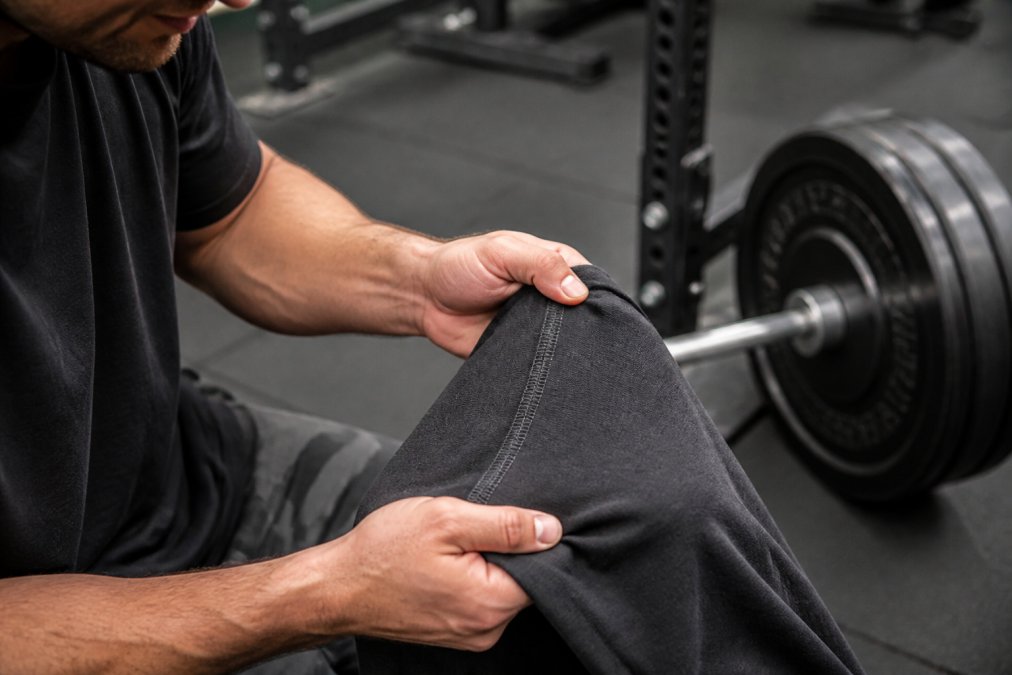
Wash durability is where budget apparel quietly fails. The fabric might feel fine in the store, then thin out and lose shape after a couple dozen cycles.
Screen-printed graphics crack when the ink is applied too thin or cured incorrectly. A quality print flexes with the fabric instead of sitting on top of it.
The thing nobody tells you about "moisture-wicking" claims: wicking performance degrades as fabric pills. Once the surface breaks down, sweat stops moving to the outer layer.
Best Workout Apparel for Heavy Training: What to Look For by Category
The best workout apparel for heavy training varies by category, because a pump cover and a pair of training shorts have different jobs. Match the piece to the demand.
Tops and Pump Covers
Tops for heavy training split into two roles: the fitted base layer and the oversized pump cover.
The base layer should be a moisture-wicking performance fabric that stays close to the body. It manages sweat during the working sets.
The pump cover is the heavyweight layer you throw on between lifts. HaterAide Energy Apparel offers heavyweight oversized pump covers designed for comfort over a sweaty base layer with a motivational graphic that keeps your head in the session.
Look for a cover that drapes without clinging. If it sticks to your base layer, it's too thin.
Shorts and Bottoms
Shorts for heavy training need a gusseted crotch, a secure waistband, and fabric that doesn't restrict a deep squat.
A common failure point is the waistband. A drawstring-only closure slips under a belt. Look for a wide, elasticized band that holds position.
Length matters for different lifts. Shorter inseams free up the hip for squats; longer ones protect the thigh during deadlift bar contact. Neither is "better," it depends on your training.
Sizing, Fit, and Returns: Getting It Right the First Time
Sizing across gym apparel brands is inconsistent, so measure rather than assume. A medium in one brand can fit like a large in another, which is why returns happen.
The fix is simple: take your chest, waist, and shoulder measurements before you order, then match them to the brand's own size chart. Don't rely on the size you wear in a different brand.
For oversized pump covers, decide upfront whether you want a true oversized fit or a relaxed one. A relaxed fit runs closer to standard sizing; a true oversized cut adds deliberate room.
HaterAide Energy Apparel provides sizing guidance on each product page, so check that chart rather than guessing from past purchases elsewhere.
Common Mistakes When Buying Workout Apparel for Heavy Training
Buying on looks alone is the most expensive mistake in gym apparel. A graphic that looks great online tells you nothing about seam strength or fabric weight.
Other frequent errors:
- Sizing up for "roominess" and ending up with fabric that bunches under a belt
- Ignoring fabric content and buying cotton for high-sweat sessions
- Skipping the wash-care label and shrinking a good shirt in the dryer
- Assuming a brand's sizing carries over from a different brand
- Prioritizing a low price over seam and fabric quality, then replacing the shirt twice a year
Each of these costs more over time than buying one durable piece upfront.
The mindset shift is the same one that works in training: discipline over convenience. Buy for the long block, not the single session.
Frequently Asked Questions
Is cotton or polyester better for intense weightlifting?
It depends on the lift and the climate. Cotton breathes well and feels soft against the skin, but it soaks up sweat and gets heavy during long sessions. Polyester and polyester blends wick moisture away from the body and dry faster, which keeps the fabric from clinging mid-set. For heavy training, most lifters do better with a polyester blend or a cotton-poly mix: the polyester handles sweat, and the cotton adds structure so the shirt holds its shape through repeated washes. Pure cotton works fine for shorter, lower-sweat sessions.
What features should I look for in durable gym shirts for lifting?
Start with fabric weight and blend. Heavier knits resist stretching out at the neck and shoulders, which is where lifting shirts fail first. Check the stitching at stress points: shoulder seams, armpits, and the hem. Flatlock or reinforced seams handle pulling better than standard overlock. Look for a bit of stretch (often from elastane) so the shirt moves with your shoulders during pressing and pulling. Finally, check the wash instructions; garments that hold color and shape after 20+ washes usually have tighter knit construction and better dye processes.
Do I need specialized clothing for powerlifting or bodybuilding?
You do not need specialized clothing to train, but the right apparel removes distractions. Loose shirts can ride up during overhead presses; tight collars restrict neck movement during squats. Shorts that bind at the hip limit squat depth. For powerlifting, many lifters prefer a snug-fitting top and shorts with a bit of stretch so nothing shifts under the bar. Bodybuilders often favor pump covers or oversized tops between sets for warmth and coverage. The goal is gear that stays in place and does not distract you from the lift.
How does apparel quality affect performance during heavy training?
Apparel does not add strength, but poor gear costs you focus. Shirts that cling after ten minutes of sweating make you adjust mid-set. Seams that split or hems that fray force you to replace gear constantly. Fabric that traps heat raises your body temperature and slows recovery between sets. Quality apparel keeps moisture moving, holds its shape, and stays where you put it, so your attention stays on the bar. That consistency matters more than any single feature.
Heavy training exposes weak gear fast, and replacing failed apparel every few months adds up. HaterAide Energy Apparel builds veteran-owned gym wear for lifters who train with discipline: heavyweight oversized pump covers, moisture-wicking graphic gym shirts, and durable construction meant to hold up through intense sessions. If you want apparel that reinforces focus instead of distracting you mid-set, get started with HaterAide Energy Apparel and shop men's tees built for the long haul.